


 EN
EN DE
DE CH
CH AT
AT
When employees ask about salary differences: A guide for HR
 Lisa Puls
"Why does my colleague earn more than I do?"
This question is already one of the most challenging conversations in HR today. As salary transparency continues to increase, it is likely to be asked even more frequently in the future. For HR teams, it is therefore no longer enough to make compensation decisions internally and accurately. They also need to explain them in a way that employees can understand.
Often, dissatisfaction is not caused by salary levels themselves, but by the feeling that a decision cannot be understood. Employees are more likely to accept differences when they understand the criteria behind them. Transparency builds trust – and this trust will become an increasingly important factor in successful compensation strategies.
Salary differences are not automatically unfair
When employees learn that colleagues earn more than they do, their first reaction is often that the situation is unfair. However, salary differences can be entirely justified.
Professional experience, specialist expertise, leadership responsibilities or varying market demands can all lead to differences in compensation. Performance and individual development may also play a role. What matters most is that these criteria are clearly defined and applied consistently across the organization. Problems arise when companies make distinctions but cannot explain them. This leads to uncertainty and speculation. Employees begin to wonder why certain people are placed in higher salary brackets or why others receive larger increases. Without clear answers, trust in the entire process suffers.Transparency does not mean disclosing every salary
When people hear the term salary transparency, many immediately think of publishing everyone's salary. In reality, transparency is about something else entirely: transparency around the rules.
Employees want to understand which criteria are used for compensation decisions, how career levels are structured and what opportunities they have to grow. They want to know what is expected of them and what is required to develop professionally and financially.
The most important question is therefore often not: "How much does my colleague earn?" But rather: "What can I do to develop further?" Companies that can provide a clear answer to this question reduce uncertainty and create trust.
Salary communication: Avoiding common pitfalls
Many conflicts around compensation do not arise spontaneously. They are often the result of unclear processes and a lack of transparency. One common issue is overly vague communication. Statements such as "The budget was limited this year" or "This was an internal decision" may be factually correct, but they do little to help employees understand the situation. They do not explain which criteria were used or what opportunities exist for future growth.
Another challenge is insufficient preparation of managers. In many organizations, managers conduct salary discussions but lack clear guidelines or consistent talking points. As a result, communication varies from team to team and compensation decisions may appear inconsistent. Documentation also plays an important role. If salary decisions are not recorded in a transparent and understandable way, it becomes difficult to explain them later. This can quickly lead to uncertainty, especially during recurring compensation reviews or leadership changes.
Finding the right answers
Sooner or later, almost every company faces the question: "Why does my colleague earn more than I do?" Instead of discussing another person's compensation, the focus should shift to the employee's own role and development. A possible answer could be: "We cannot provide information about the compensation of other employees. However, I would be happy to explain how your position is evaluated and what opportunities you have to develop further.
This shifts the conversation away from comparisons and toward concrete development opportunities. Employees gain a better understanding of the factors that influence their compensation and the steps they can take themselves. More and more companies are therefore introducing salary bands and clearly defined career levels. These create a transparent framework for compensation decisions. Employees understand what is expected of them and how they can progress within the organization. At the same time, managers receive an objective basis for their decisions.
As a result, salary discussions also change. Instead of focusing on individuals or perceived inequalities, companies talk about roles, competencies and development opportunities. This creates a more objective conversation and strengthens trust in the compensation structure. Even though HR designs the processes, the actual communication often takes place within teams. Managers therefore play a crucial role. They need to understand the compensation structure, explain decisions confidently and handle difficult questions with ease. To do so, they require not only the right data, but also clear guidelines and communication strategies.
When HR and managers work together, trust grows. Employees understand which criteria are used for decisions and what opportunities are available to them.
Conclusion
Salary transparency is changing more than compensation models – it is changing the way companies talk about money. Employees expect understandable decisions, clear criteria and guidance for their own development. Companies that invest early in transparent processes and open communication build trust and strengthen employee retention in the long term.
In the end, it is not only the salary itself that matters. What matters just as much is whether companies can clearly explain how compensation decisions are made.

Related Articles

EU AI Act in HR: Which AI tools are allowed – and which are not?
Can ChatGPT be used in recruiting? Are AI candidate rankings still allowed? Here's what the EU AI Act really means for HR — which AI tools stay permitted, and which become high-risk.
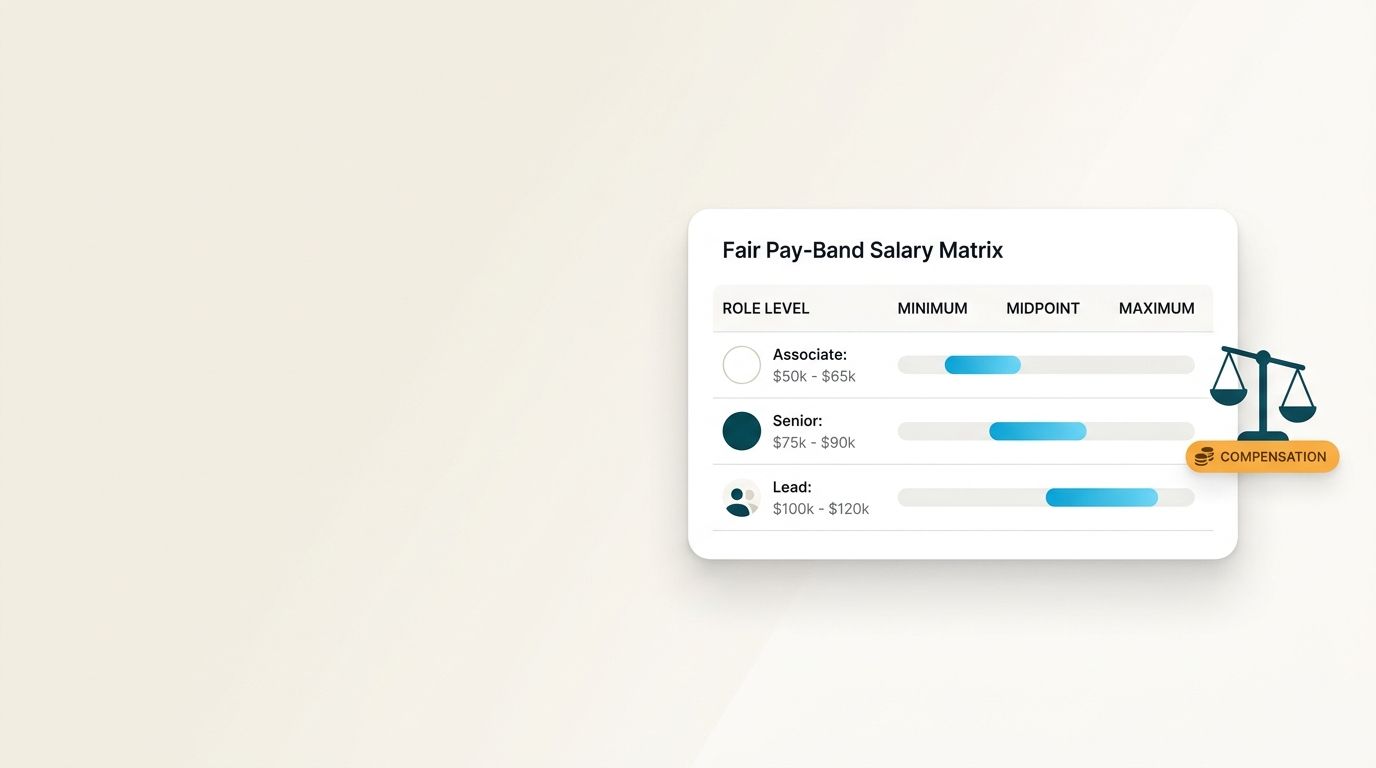
Pay Bands 2026/2027: How to Build a Fair Salary Matrix – Before It Becomes Mandatory
The EU Pay Transparency Directive means pay must follow objective, gender-neutral criteria — and Germany's slipping timeline is your window to build a fair salary matrix now. A step-by-step guide to pay bands.

Origins to Innovation: Cloud Computing's Impact on HR
Do you know why it's called cloud computing and are you aware of the benefits to HR?